How Long Do Dental Implants Last? Lifespan, What Fails and How to Care for Them (2026)
A well-placed implant fixture often lasts a lifetime; studies typically report around 95% still in place at 10 years. The crown is the wearing part and is usually replaced after 10 to 15 years. Late failures are mostly caused by peri-implantitis, and smoking roughly doubles the risk. Six-monthly hygiene visits, a yearly check and a night guard if you grind decide the lifespan. Our guarantee: implant fixture for life, zirconia crowns 3 years; a replacement crown costs 200 to 350 EUR at our clinic.
A well-placed dental implant usually lasts decades and often a lifetime: studies typically report around 95% of implants still in place after 10 years. The crown on top is a wearing part and typically lasts 10 to 15 years before it needs replacing. At our clinic in Fethiye the implant fixture carries a lifetime guarantee and zirconia crowns a 3-year guarantee. Whether your implant reaches the long end of that range depends far less on luck than on four things you can influence: the health of the gum around it, smoking, grinding and regular check-ups. This guide explains which part fails, why, what it costs to fix, and how to look after an implant once you are back home.
How long dental implants really last, part by part
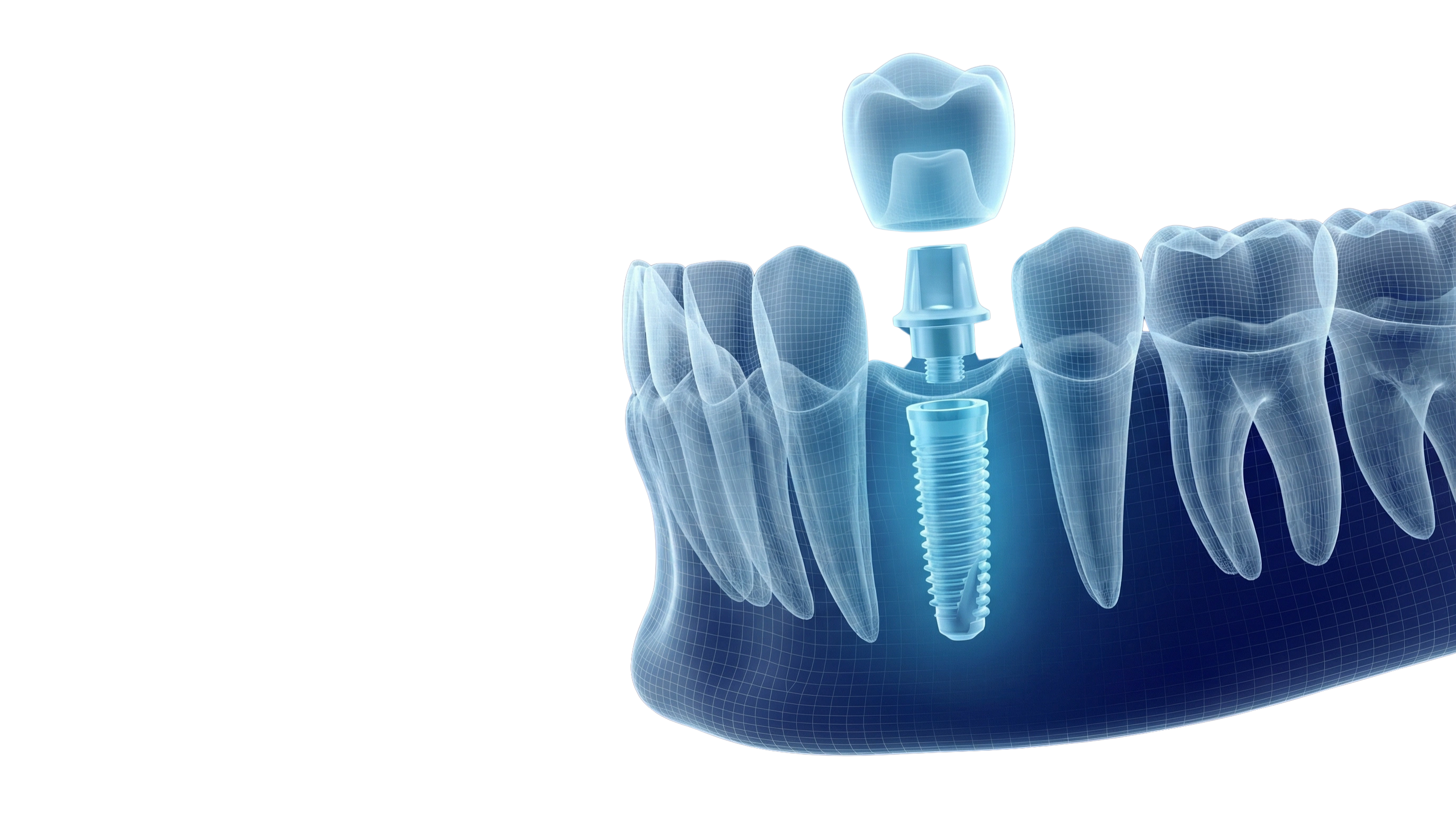
An implant is not one piece. When people ask how long dental implants last, the honest answer is different for each of the three components:
Component
What it is
Typical lifespan
Usual problem
Implant fixture
Titanium screw fused with the jawbone
Decades, often lifelong; around 95% still in place at 10 years in published reviews
Bone loss from peri-implantitis, rarely fracture
Abutment and screw
Connector between implant and crown
Long-lasting; the screw can loosen
A loose screw, fixed in a short appointment
Crown on the implant
The visible tooth, usually zirconia
Typically 10 to 15 years
Wear, chipping, a fracture after a knock
Implant bridge or All-on-4 arch
Several teeth on two to six implants
Typically 10 to 15 years for the bridge, implants longer
Worn acrylic teeth, chipped ceramic
For comparison, a conventional bridge on natural teeth typically lasts 10 to 15 years and depends on the health of the two teeth it is cemented to, and a removable denture typically 5 to 7 years with relining as the bone under it shrinks. The implant is the only option in that list designed to stay for life; the parts above it are designed to be replaced.
What actually fails, and how often
Early failure happens in the first weeks or months, before the crown is fitted: the implant does not fuse with the bone. It is uncommon, shows up during the healing period and is replaced under our guarantee. Smoking, infection and poor bone quality are the usual reasons.
Late failure after years is almost always caused by peri-implantitis, an inflammation of the gum and bone around the implant driven by plaque, much like gum disease around a natural tooth. Studies typically report it in around one in five implant patients at some point, usually in a mild form; the earlier stage, mucositis, is more common and fully reversible with cleaning. Left untreated, peri-implantitis slowly dissolves the bone that holds the implant. Our guide to gum disease explains the same process around natural teeth, and people who lost teeth to gum disease carry a higher risk around implants too.
Mechanical problems are the most common and the least serious: a loosened abutment screw, a chipped or worn crown. Published long-term reviews typically find that roughly nine in ten original single crowns are still in service at 10 years, which is why we describe the crown as the wearing part.
Factors that decide whether an implant lasts 15 years or 40
Gum health and daily cleaning. The single biggest factor. Implants cannot decay, but the tissue around them can become inflamed. An interdental brush or water flosser around the implant every day matters more than any brand.
Smoking. Systematic reviews typically find that smoking roughly doubles the risk of implant failure. Our guarantee on implants is limited for heavy smokers, and we say so in the written plan before you book.
Diabetes and general health. Well-controlled diabetes is compatible with implants; poorly controlled diabetes slows healing and raises infection risk. Some medicines, such as bisphosphonates for osteoporosis, need to be discussed before surgery.
Grinding and clenching. Bruxism overloads the crown and the screw. A night guard, worn every night, protects both and is a condition of the guarantee on ceramic work.
Bone volume and position. An implant needs enough bone around it. Where bone is thin, grafting or a sinus lift comes first; our sinus lift and bone graft guide explains when.
Planning and placement. A CT scan, the right angle and depth, and a crown that does not take the full biting load all set the foundation for decades of use.
Does the implant brand matter?
Yes, though not for the reason most adverts suggest. Established systems such as Straumann, Nobel Biocare and Osstem have decades of published clinical data, and their parts are available worldwide. At Smile & Holiday we use Straumann and Osstem. The practical advantage is repairability: if a screw loosens or a crown has to be remade in ten years, a dentist in the UK can order compatible components only if they know exactly what is in your jaw. Unknown budget systems may save a little at the start and leave you with an implant nobody at home can service. Our implant brands comparison covers the differences.
That is why every patient leaves with an implant passport: brand, system, diameter, length, batch number, abutment type and the position of each implant, plus copies of the X-rays. Keep it with your medical documents and give a copy to your dentist at home.
Daily care and check-ups once you are home
Brush twice a day with a soft or electric toothbrush, angled at the gum line around the implant.
Clean between the teeth daily with an interdental brush in the right size, or a water flosser for bridges.
Have a hygiene visit every six months. Tell the hygienist you have implants so they use suitable instruments.
Have the implant checked with an X-ray about a year after the crown is fitted, then as your dentist advises, typically every one to two years.
Send us the hygiene report or a photograph once a year. It keeps your file current and helps us spot a problem early.
Wear the night guard if one was made for you, and do not use implant teeth to open packaging or crack nuts.
The first weeks after surgery have their own routine, covered in our implant aftercare guide.
Warning signs: when to contact a dentist
Bleeding, swelling or redness around the implant that lasts more than a few days
Pus, a bad taste or persistent bad breath from one spot
The gum receding so that metal becomes visible
A crown that feels loose, clicks or rotates
Pain when biting on the implant tooth
A loose crown or screw fixed in the first week is a short appointment; the same problem left for months can damage the abutment or the bone. Contact us with a photo first: most cases can be assessed remotely, and minor adjustments can often be done by your local dentist with our instructions.
What a repair costs later: UK prices and ours
Item
UK private, typical
Smile & Holiday, Fethiye
Implant with abutment
£2,000 to 3,000
From 500 EUR (500 to 2,500 EUR depending on brand and bone work)
Zirconia crown on an implant
£700 to 1,200
200 to 350 EUR
Complete single tooth
Typically £2,500 to 4,000
From about 700 EUR
Replacing a worn crown after 10 to 15 years
£700 to 1,200
200 to 350 EUR, one trip of about 5 days
The NHS provides implants only in rare clinical cases, so for most people in the UK the comparison is with private prices.
Worked example: one implant and three implants, with two trips
An implant takes two trips: 3 to 5 days for placement, then 5 to 7 days for the crown after 3 to 6 months of healing. The figures below use a typical UK private price of £3,000 per complete tooth, our price of about 850 EUR (about £740) per tooth and £1,000 for two return flights to Dalaman plus ten hotel nights.
Case
UK private, typical
Treatment at our clinic
2 trips: flights and 10 nights
Total in Fethiye
Difference
1 implant with crown
£3,000
£740
£1,000
£1,740
Around £1,260 less
3 implants with crowns
£9,000
£2,220
£1,000
£3,220
Around £5,780 less
On a single implant the saving exists but is modest once two trips are counted. If your local quote is at the low end, or you cannot take two separate weeks off, treatment at home is the sensible choice. The trip planning guide shows how the visits fit together.
When travelling for an implant is not worth it
Travel does not make sense if you need one implant and have a fair quote locally, if you have untreated gum disease (that is treated first, wherever the implant is placed), if your diabetes is not under control, or if you smoke heavily and are not prepared to stop around the surgery. It also does not suit anyone who will not have hygiene visits at home: an implant without maintenance is the one most likely to fail, whoever placed it.
Our implant guarantee
Our written guarantee covers the implant fixture for life: if an implant fails to integrate or is lost, we replace the implant at no charge. Zirconia crowns and bridges carry a 3-year guarantee against fracture, chipping and material defects. The guarantee does not cover trauma, grinding without the recommended night guard, problems caused by neglected hygiene, work altered by another dentist, or flight costs, and it is limited for heavy smokers. The full terms are in our guarantee guide.
Send a panoramic X-ray or CT scan through the consultation form. Dr. Mustafa Besli, who has practised implantology and aesthetic dentistry for over 15 years, reviews it, and you receive a written plan naming the implant brand, any bone work needed and the price before you book anything. See our dental implant treatment page for the full process.

Dr. Mustafa Besli
Smile & Holiday
Dr. Mustafa Besli is the head dentist at Smile & Holiday in Fethiye, Turkey, specializing in aesthetic dentistry, smile design, and implantology with over 15 years of clinical experience.
Frequently Asked Questions
Frequently asked questions about this topic
Related Treatments
Explore treatments related to this article