Dental Bridge Cost in 2026: UK Prices by Type, NHS Band 3 and Turkey Compared
A zirconia bridge is 200 to 350 EUR per unit at our clinic, so a 3-unit bridge for one missing tooth is 600 to 1,050 EUR, and a 3-unit bridge on two implants starts from about 1,600 EUR. Privately in the UK a 3-unit bridge typically costs £1,500 to 3,000; on the NHS it is £332.10 as a Band 3 course, usually in metal-ceramic. With flights and six hotel nights one bridge saves around £880 against a typical £2,200 quote and two bridges around £2,360. The work takes one trip of 5 to 7 days, and zirconia bridges carry a 3-year written guarantee.
A dental bridge costs 200 to 350 EUR per unit in zirconia at our clinic in Fethiye, so a standard 3-unit bridge for one missing tooth is 600 to 1,050 EUR, against typically £1,500 to 3,000 privately in the UK, or £332.10 on the NHS as a Band 3 course, where the bridge is usually metal-ceramic and the wait can run to months. Against a typical private quote, one bridge already saves around £800 once flights and a hotel are counted; two bridges, or a bridge plus crowns, save more than £2,000. This guide explains the four types of bridge, what each material costs, what the NHS covers, how long a bridge lasts, and how the numbers work out for a real trip.
How bridge work is priced: units, not teeth
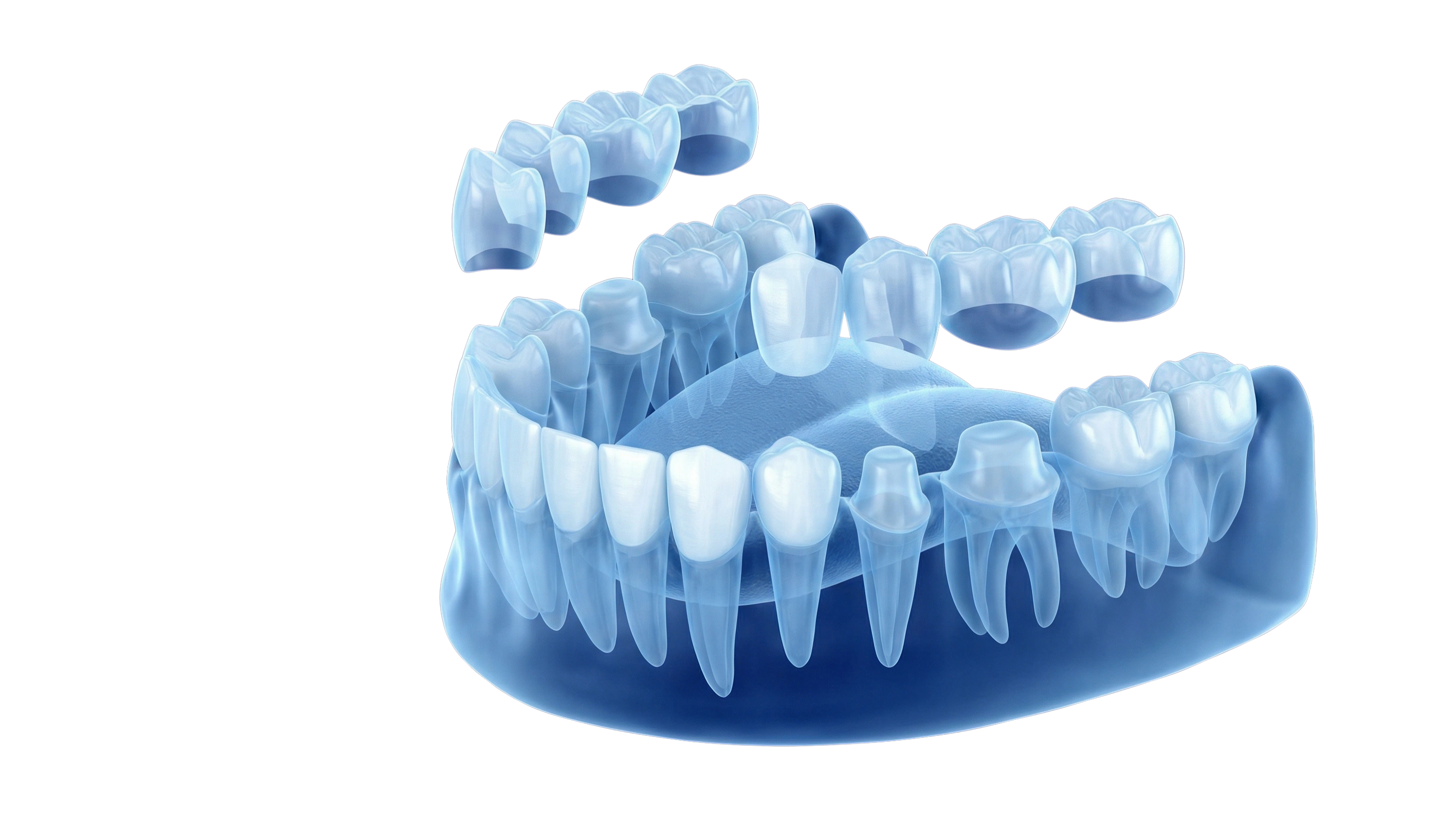
A bridge is priced by the unit. Each crown on a supporting tooth, called an abutment, is one unit, and each false tooth suspended between them, called a pontic, is one unit. One missing tooth with a crown on each neighbour makes a 3-unit bridge; two missing teeth side by side need a 4-unit bridge. When UK practices quote for bridge work they usually give a price per unit and multiply it, which is why two quotes for "a bridge" can differ by more than a thousand pounds. Before you compare any prices, including ours, ask for the number of units and the material in writing.
The four types of dental bridge
Conventional (traditional) bridge
The standard bridge: the teeth on either side of the gap are prepared for crowns and the false tooth is joined between them as one piece. It suits one or two missing teeth where both neighbours are strong enough to carry a crown, ideally teeth that already have large fillings or old crowns, so preparing them costs little healthy enamel. Its weakness is exactly that preparation: if the neighbouring teeth are untouched, cutting two healthy teeth to replace one is a poor trade, and an implant or a bonded bridge may be the better answer. For one missing tooth it is 3 units, which at our clinic is 600 to 1,050 EUR in zirconia.
Cantilever bridge
The false tooth is attached to one supporting tooth only. It is used where there is a tooth on one side of the gap only, or to replace a small front tooth such as a lateral incisor, where the biting load is light. It is not a good choice for a missing molar, because chewing forces lever the single abutment and can loosen or fracture it. A cantilever bridge is usually 2 units, 400 to 700 EUR in zirconia at our clinic.
Maryland (resin-bonded) bridge
A false tooth with thin wings that are bonded to the back of the neighbouring teeth, with little or no drilling. It is the most conservative fixed option for a missing front tooth, especially for younger patients or as a long-term placeholder before an implant. It can come unstuck and need re-bonding, and it is not suitable for back teeth or for people with a heavy bite. We quote it case by case after seeing an X-ray and photographs, because the design depends on how much enamel the neighbouring teeth offer.
Implant-supported bridge
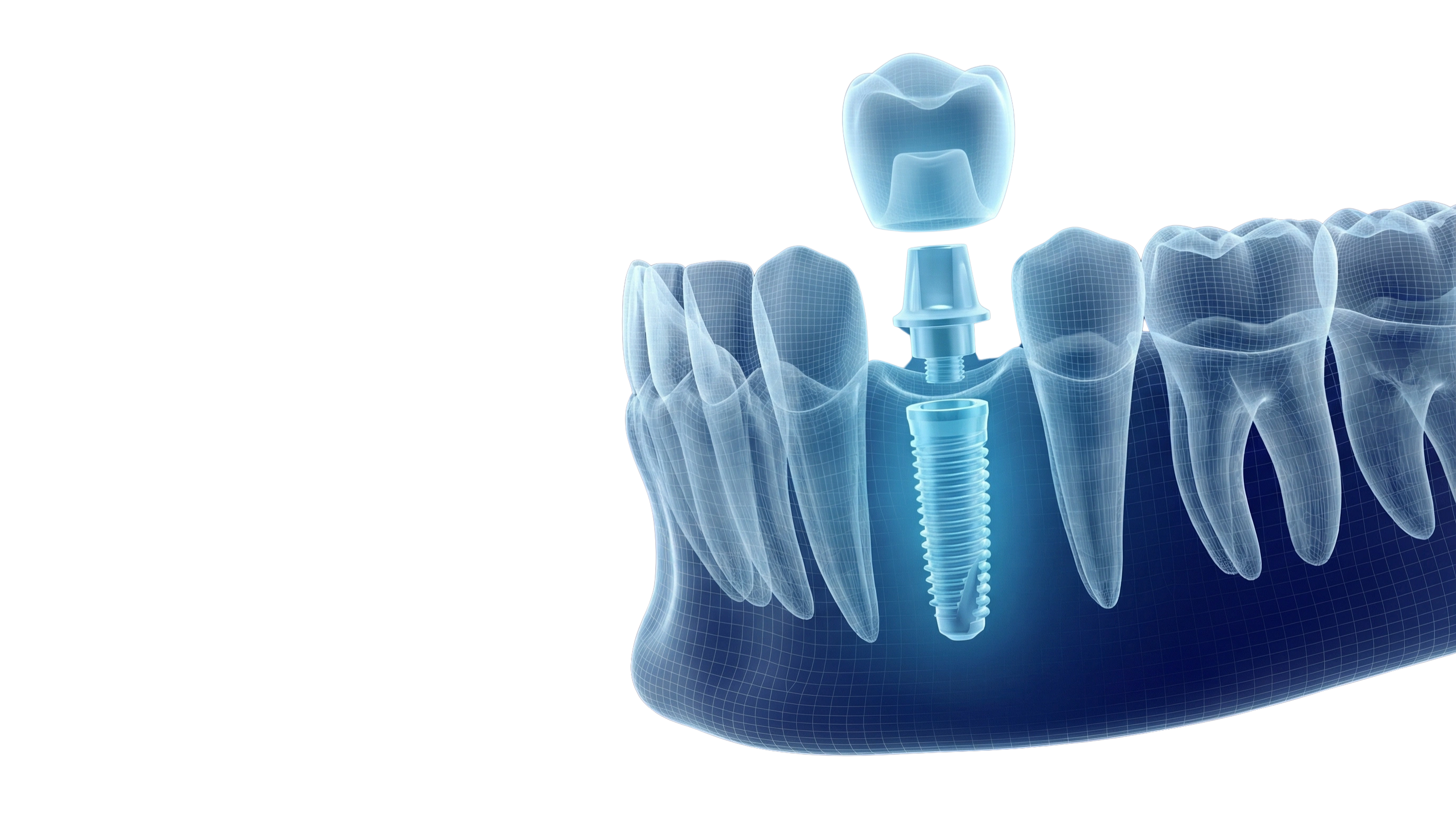
Here the bridge rests on implants instead of natural teeth. Two implants can carry a 3-unit bridge that replaces three missing teeth in a row, so you pay for two implants rather than three. It leaves your remaining teeth untouched and preserves bone at the implant sites, but it needs enough bone, a CT scan and two trips. At our clinic it is priced as implants from 500 EUR each plus the bridge units at 200 to 350 EUR each, so a 3-unit bridge on two implants starts from about 1,600 EUR. Premium implant brands or bone grafting raise the figure, and the written plan fixes it once we have seen your scan. Our dental implants page covers the implant side.
Bridge materials compared
Material
Aesthetics
Strength
Best for
Per unit at our clinic
Per unit in the UK, private
Monolithic zirconia
Good, slightly opaque
Very high
Back teeth, longer spans, grinders
200 to 350 EUR
Typically £500 to 1,000
Layered zirconia
Very good
High core, porcelain layer can chip
Front teeth and visible premolars
200 to 350 EUR, upper end
Typically £600 to 1,000
E-max (lithium disilicate)
Excellent, translucent
Good, but only for short spans
3-unit front bridges up to the premolar
280 to 400 EUR
Typically £600 to 1,000
Metal-ceramic (PFM)
Acceptable, grey margin at the gum over time
High
Back teeth on a budget; the usual NHS bridge
Quoted case by case, below zirconia
Typically £400 to 800; NHS Band 3 £332.10 per course
Zirconia is our default for most bridges, because the connectors between the units carry the highest stress and zirconia handles that load best. E-max looks the most natural but is not strong enough for long spans or molars, so we use it only for short front bridges. Metal-ceramic is a proven, sound bridge and remains what the NHS usually provides; its porcelain chips more readily and the metal edge shows as the gum recedes. The material choice is covered in more depth in our zirconia crowns guide.
Dental bridge cost in the UK in 2026 vs Fethiye
Bridge
NHS England
UK private, typical
Smile & Holiday, Fethiye
Conventional, 3 units, zirconia
Not usually offered
£1,500 to 3,000
600 to 1,050 EUR
Conventional, 3 units, metal-ceramic
Band 3, £332.10 per course
£1,200 to 2,400
Quoted case by case
Cantilever, 2 units
Band 3 where clinically needed
£750 to 2,400
400 to 700 EUR in zirconia
Maryland, one false tooth
Rarely offered
£350 to 1,000
Quoted case by case
Implant-supported, 3 units on 2 implants
Not offered except in rare clinical cases
Typically £5,000 to 8,000
From about 1,600 EUR
UK private prices vary by region more than by material: London practices often charge £1,000 or more per unit, while practices in smaller towns can be well below £500. That spread is why we quote typical ranges rather than one figure.
What the NHS pays for a bridge
In England a bridge falls under Band 3, which is £332.10 from April 2026 for the whole course of treatment, however many units it has, and it also covers any fillings and extractions in the same course. If your dentist agrees a bridge is clinically needed and you can get NHS treatment, nothing in this article beats that price. There are three caveats. The NHS bridge is usually metal-ceramic, implant-supported bridges are not provided except in rare clinical cases, and many practices are not accepting new adult NHS patients, so for many people the real choice is between UK private and treatment abroad. Scotland and Northern Ireland charge 80% of the fee up to a cap of £384 per course, and Wales has its own charges. Irish readers can claim 20% Med 2 tax relief on bridgework as non-routine treatment, including treatment abroad. Every band is listed in our NHS charges vs private vs Turkey guide.
How long a bridge lasts
A well-made conventional bridge typically lasts 10 to 15 years, often longer. It rarely fails because the ceramic breaks; it fails because a supporting tooth decays at the margin or later needs a root canal. That is why cleaning under the false tooth every day with floss threaders or interdental brushes matters more than the material you choose. Maryland bridges typically last 5 to 10 years and may need re-bonding along the way. On an implant-supported bridge the implants are meant to last for life with good hygiene, and the bridge on top typically 10 to 15 years. If you are still deciding between a bridge and an implant for a gap, the bridge vs implant comparison and the implants vs bridges comparison page set out the decision.
Worked example: one bridge, two bridges, flights included
The figures below use a typical UK private price of £2,200 for a 3-unit zirconia bridge and £900 for a crown, our zirconia price at roughly 275 EUR per unit (about £240), and £600 for a return flight to Dalaman plus six hotel nights. Your own numbers will differ; the pattern will not.
Case
UK private, typical
At our clinic
Flights and 6 nights
Total in Fethiye
Difference
1 bridge, 3 units
£2,200
£720
£600
£1,320
Around £880 less
2 bridges, 6 units
£4,400
£1,440
£600
£2,040
Around £2,360 less
1 bridge and 2 crowns, 5 units
£4,000
£1,200
£600
£1,800
Around £2,200 less
Against a cheaper local quote of around £1,500, a single bridge saves little more than the cost of the trip, and travelling only makes sense if you want zirconia rather than metal-ceramic. Against London-level quotes, or with two bridges, the saving is substantial, because the travel cost is fixed and every extra unit widens the gap. If several crowns are on your plan as well, our dental crown cost guide has those numbers.
The process: one trip of 5 to 7 days
Day 1: examination, panoramic X-ray and the written plan confirmed unit by unit. Any root canal or removal of old fillings on the supporting teeth comes first. The abutment teeth are prepared, scanned digitally (no impression trays) and a temporary bridge is fitted the same day, so you never leave with a gap.
Days 2 to 4: the laboratory mills the bridge. We try it in to check the fit on both abutments, the contact of the false tooth with the gum and the shade, before the final glaze.
Days 5 to 7: final cementation, bite check, polishing and a lesson in cleaning under the bridge. You leave with the guarantee document and written aftercare.
Two situations change this. If the tooth to be replaced is still in your mouth and has to come out, the gum and bone usually need 2 to 3 months to settle before the final bridge, otherwise a gap opens under the false tooth; you either have the extraction at home first or come twice, leaving with a temporary bridge after the first visit. An implant-supported bridge is always two trips, 3 to 6 months apart. Our treatment timeline guide gives the days for each treatment.
What the guarantee covers
Our written guarantee is 3 years on zirconia crowns and bridges, covering fracture, chipping and material defects, which are remade at no charge. Implants carry a lifetime guarantee on the fixture. It does not cover trauma, grinding without the night guard we recommend, decay at the margin of a supporting tooth from neglected hygiene, work altered by another dentist, or the cost of flights. The full terms are in our guarantee guide.
When it is not worth travelling
You can get NHS Band 3 treatment and are happy with a metal-ceramic bridge on a back tooth. £332.10 is cheaper than any trip.
You need one bridge and your local quote is around £1,500. The saving roughly equals the travel cost.
The supporting teeth are weak: untreated gum disease, large untreated decay or a poor root. A bridge is only as good as the teeth that hold it; treat those first, or consider an implant or a denture instead.
The neighbouring teeth are healthy and untouched. Cutting them for crowns is a high price for one missing tooth; an implant or a Maryland bridge spares them, and we will tell you so.
You cannot take 5 to 7 days, or the tooth still needs extracting and two trips are impossible.
How it works with us in Fethiye
Send a recent X-ray or clear photographs of the gap through the consultation form. Dr. Mustafa Besli, our head dentist, reviews them and you receive a free written treatment plan that states the bridge type, the number of units, the material and the price before you book anything. Flights from Stansted, Manchester, Dublin and other UK and Irish airports land at Dalaman, about 45 to 60 minutes from the clinic. Airport transfers are included, hotel arrangements are made on request, and the guarantee document is issued in English. If the examination shows that a supporting tooth needs more work, or that a different bridge type suits you better, the plan is changed in writing before any treatment starts.

Dr. Mustafa Besli
Smile & Holiday
Dr. Mustafa Besli is the head dentist at Smile & Holiday in Fethiye, Turkey, specializing in aesthetic dentistry, smile design, and implantology with over 15 years of clinical experience.
Frequently Asked Questions
Frequently asked questions about this topic
Related Treatments
Explore treatments related to this article