Missing Tooth: All the Replacement Options and What Each Costs in 2027
A missing tooth can be replaced with an implant (UK private typically £2,000 to 3,500), a conventional bridge (£1,500 to 3,000 for 3 units), a Maryland bridge (£350 to 1,000) or a partial denture or flipper (from about £250); the NHS provides bridges and dentures under Band 3 for £332.10, implants only in exceptional cases. Healthy neighbours favour an implant, heavily filled ones a bridge, and a missing front tooth in a young patient often a Maryland bridge. Leaving a gap lets teeth drift, the opposing tooth over-erupt and the bone shrink, though a missing last molar often needs nothing. There is no safe DIY fix. In Fethiye an implant tooth is typically 700 to 850 EUR and a 3-unit zirconia bridge 600 to 1,050 EUR; travel pays off from two missing teeth, not for a single flipper or Maryland bridge.
A missing tooth can be replaced with an implant, a bridge, a resin-bonded (Maryland) bridge or a partial denture, and in a few cases it can be left alone. In the UK in 2027 a single implant typically costs £2,000 to 3,500 privately, a conventional 3-unit bridge £1,500 to 3,000, a Maryland bridge £350 to 1,000 and a partial denture or flipper from about £250, while the NHS provides bridges and dentures under Band 3 for £332.10. Which one is right depends less on the price than on where the gap is, the state of the teeth next to it and the bone underneath. This guide sets out every option, what happens if you do nothing, how the choice differs for a front tooth and a back tooth, and when treatment in Turkey makes sense.
All the options at a glance
Option
How it works
Best for
UK private, typical
Typical lifespan
Dental implant with crown
Titanium root in the bone, crown on top
Any single gap with enough bone, especially when the neighbours are healthy
£2,000 to 3,500
Implant for decades, crown 10 to 15 years
Conventional bridge
Crowns on both neighbours carry a false tooth
Gaps where the neighbours already have large fillings or crowns
£1,500 to 3,000 for 3 units
10 to 15 years
Cantilever bridge
One crowned neighbour carries the false tooth
Small front teeth with a light bite
£750 to 2,400
Often 10 years or more
Maryland (resin-bonded) bridge
False tooth with thin wings glued behind the neighbours
A missing front tooth, younger patients, a placeholder before an implant
£350 to 1,000
5 to 10 years, may need re-bonding
Partial denture or flipper
Removable plate with one or more teeth
Several gaps, a tight budget, or a temporary tooth during implant healing
From about £250 (acrylic) to £1,500 (cobalt chrome)
Acrylic flipper short term; metal-framed partial often 5 to 10 years
Leaving the gap
No treatment, regular checks
Some missing last molars with a stable opposing tooth
Nothing now
Depends on how the neighbours move
Dental implant: the closest thing to the tooth you lost
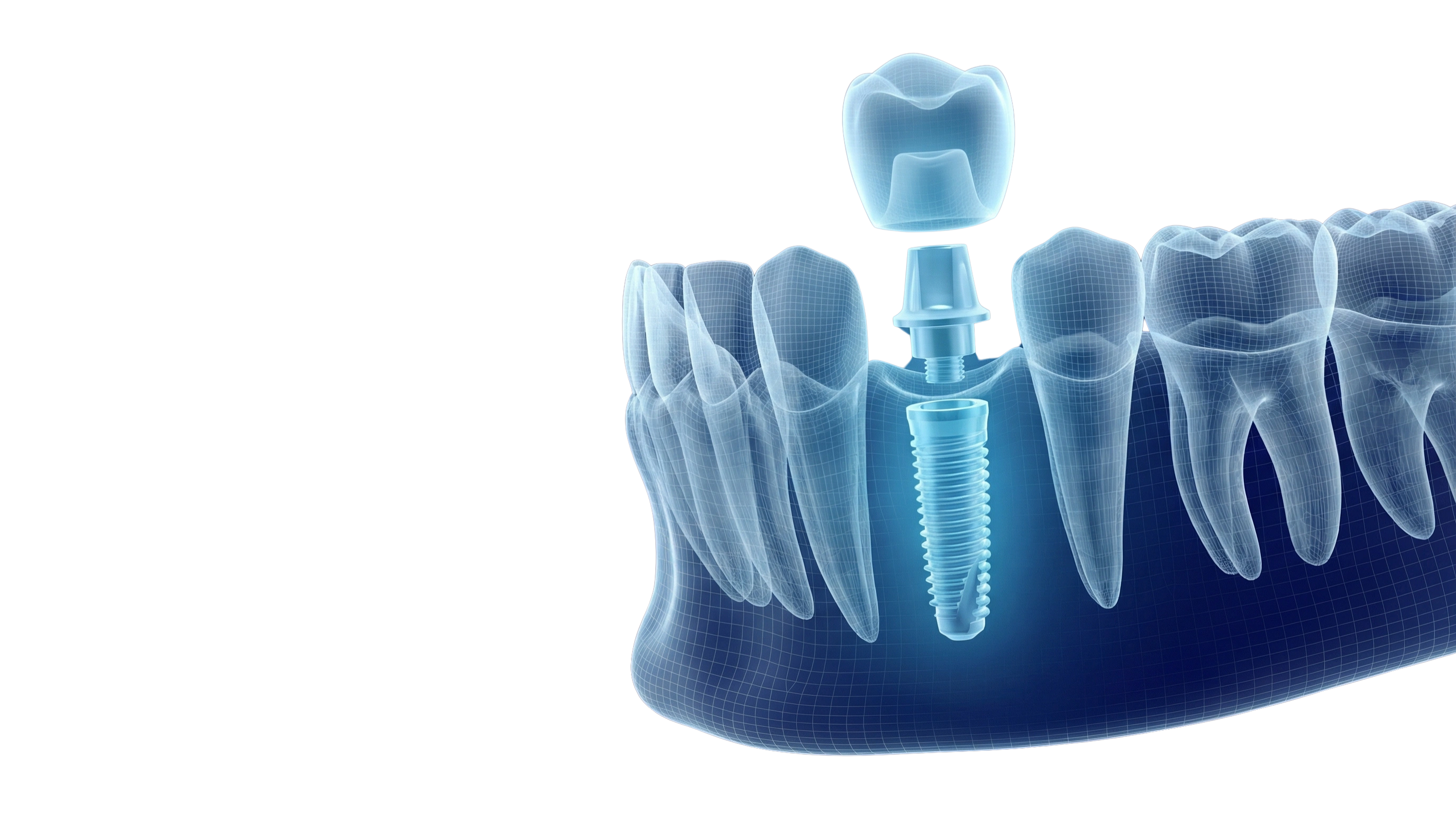
An implant replaces the root as well as the crown. It is placed into the jawbone under local anaesthetic, fuses with the bone over three to six months and then carries a crown. It is the only option that leaves the neighbouring teeth untouched and keeps loading the bone where the tooth was, which slows the shrinkage that follows every extraction. For a single gap between two healthy teeth it is usually the first choice.
The trade-offs are time, surgery and bone. If the tooth was lost years ago, the ridge may be too narrow and need a bone graft first; in the upper back jaw a sinus lift may be needed. Uncontrolled diabetes, active gum disease and heavy smoking all reduce the chance of success. Privately in the UK a complete implant tooth typically costs £2,000 to 3,500; our implant cost guide breaks the quote down item by item.
Bridges: conventional, cantilever and Maryland
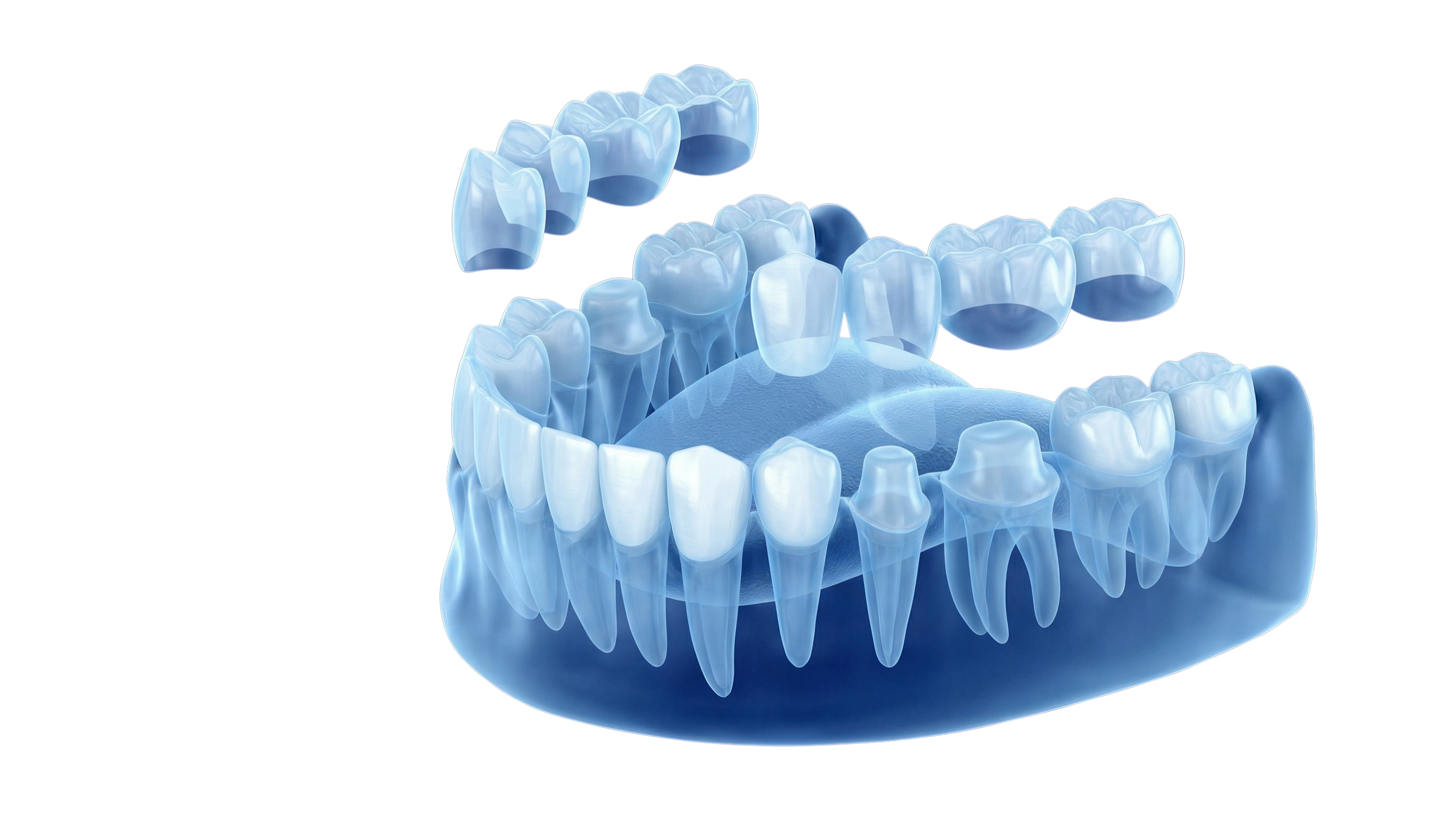
A conventional bridge crowns the teeth on both sides of the gap and joins a false tooth between them. It is fixed, quick (no healing period) and well proven. Its cost is biological: two neighbours are reshaped for crowns. If those teeth already have large fillings or old crowns, that cost is small and a bridge is a sensible choice. If they are untouched, cutting two healthy teeth to replace one is a poor trade.
A cantilever bridge hangs the false tooth from one neighbour only. It suits a small front tooth such as a lateral incisor, but not a molar, where chewing forces lever the single support.
A Maryland bridge, also called a resin-bonded bridge, is a false tooth with thin metal or ceramic wings that are glued to the back of the neighbouring teeth, with little or no drilling. It is the most conservative fixed option for a missing front tooth and is often used for teenagers and young adults until an implant is possible. It can come unstuck and need re-bonding, and it is not suitable for back teeth or a heavy bite.
The full bridge or implant decision, including the cost over twenty years, is in our bridge vs implant comparison; the dental bridge cost guide has the prices by type and material.
Partial denture and flipper: the removable options
A partial denture is a removable plate carrying one or more teeth and clasping onto the remaining ones. There are three kinds:
Acrylic partial or "flipper": a pink plastic plate with one or a few teeth. It is the cheapest and fastest option, typically from about £250 to 600 privately, and is mainly used as a temporary tooth, for example while an implant heals. It is bulky, covers part of the palate and is not designed for years of daily chewing.
Cobalt chrome partial: a thin cast metal framework, typically £600 to 1,500. It is smaller, stronger and rests on the teeth rather than the gums, which makes it the standard long-term removable option.
Flexible (nylon) partial: gum-coloured clasps with no visible metal, typically £450 to 1,500. Comfortable and discreet, but harder to adjust or add a tooth to later.
A partial denture makes most sense when several teeth are missing in different places, when surgery is not an option, or as a bridge to a later implant. For one missing tooth it is usually a compromise: it moves slightly, needs taking out at night and does not stop the bone shrinking. If most of your teeth are going, our guide to dentures, snap-on dentures and All-on-4 is the better starting point.
What happens if you leave the gap
Many people live with a gap for years, and some gaps never cause trouble. It helps to know what usually happens:
Drifting and tipping: the teeth on either side slowly lean into the space. Small gaps open between other teeth, food packs in and cleaning gets harder.
Over-eruption: the tooth in the opposite jaw has nothing to bite against and gradually grows out of its socket, exposing root surface and sometimes making a later implant or bridge harder to fit.
Bone loss: without a root, the bone at the site shrinks, most of it in the first months after the extraction. A gap left for years may need a bone graft before an implant.
Bite and chewing: people chew on the other side, which loads those teeth more. With several back teeth missing, the front teeth take forces they were not built for and can wear or fan out.
Leaving the gap is a reasonable choice in some cases. A missing last molar (second or third) often needs no replacement if the opposing tooth is stable, because the bite works well without it. Your dentist can check this on an X-ray and over a few annual visits. If the gap is a front tooth or a first molar, waiting usually narrows your options rather than saving money.
Missing front tooth vs missing back tooth
A missing front tooth is mostly about appearance and speech, and the bite load is light. Good options are an implant (if there is enough bone and gum to give a natural-looking result), a Maryland bridge (very conservative, ideal for younger patients) or a cantilever bridge. An acrylic flipper bridges the time until the permanent tooth is ready, so you never have to go out with a gap. Front implants need careful planning because a thin layer of bone at the front can show as a grey shadow through the gum.
A missing back tooth is about chewing force. Maryland and cantilever bridges are generally unsuitable here. The choice is usually an implant or a conventional bridge, decided by the state of the neighbouring teeth: heavily filled neighbours favour a bridge, healthy ones favour an implant. In the upper back jaw the sinus often sits close to the gap, so a CT scan tells you whether a sinus lift would be needed. If a back tooth is still there but failing, it is worth asking whether it can be saved first; our root canal vs implant guide covers that decision.
The cheapest routes: the NHS, and why there is no DIY fix
Missing tooth replacement on the NHS
In England a bridge or a partial denture falls under Band 3, £332.10 from April 2026 for the whole course of treatment, if your dentist agrees it is clinically needed. The NHS bridge is usually metal-ceramic and the denture usually acrylic. Implants are provided only in exceptional cases, such as after cancer surgery, serious trauma or teeth missing from birth, through hospital referral. If you can get NHS treatment and a bridge or denture suits you, nothing in this article beats that price; the difficulty is finding a practice taking new adult NHS patients. Scotland and Northern Ireland charge 80% of the fee up to £384 per course.
Can you replace a missing tooth yourself?
No, there is no safe way. Mouldable "temporary tooth" kits and DIY dentures sold online are not fitted to your bite, can trap plaque against the gums, push the neighbouring teeth and break while you eat, and glue in the mouth damages gum and teeth. If you need a quick solution for a visible gap, an acrylic flipper made by a dentist is the cheapest proper option and is usually ready within days.
The Turkey comparison: when travelling makes sense
Option for one tooth
UK private, typical
Smile & Holiday, Fethiye
Trips
Implant with zirconia crown
£2,000 to 3,500
Typically 700 to 850 EUR (about £610 to 740)
Two: 3 to 5 days, then 5 to 7 days after 3 to 6 months
Conventional zirconia bridge, 3 units
£1,500 to 3,000
600 to 1,050 EUR (about £520 to 915)
One, 5 to 7 days
Cantilever bridge, 2 units
£750 to 2,400
400 to 700 EUR in zirconia
One, 5 to 7 days
Maryland bridge
£350 to 1,000
Quoted case by case
One
Partial denture or flipper
From about £250 to 1,500
Quoted case by case
One
Bone graft, if needed
Typically £200 to 1,500 per site
150 to 400 EUR per site
Can add a trip
To be honest about the numbers: for a single flipper or Maryland bridge, travelling makes no financial sense. For one implant the saving against a typical £2,500 UK quote is real but narrow once two trips are counted, so it works best combined with other treatment or a holiday you would take anyway. The difference becomes large with two or more missing teeth, a bridge plus crowns, or several implants. Your home health cover will not usually pay towards treatment in Turkey. Our written guarantee covers the implant fixture for life (a failed or lost implant is replaced at no charge, limited for heavy smokers) and zirconia crowns and bridges for 3 years; it covers the treatment, not flights or travel. Free apartment accommodation in central Fethiye and a free private transfer from Dalaman Airport, about 45 minutes away, are included with the treatment plan.
Getting a written plan for your gap
Send a recent X-ray or clear photographs of the gap and the teeth around it through the consultation form. Dr. Mustafa Besli, who has practised implantology and aesthetic dentistry for more than 15 years, will tell you in writing which options suit your case, whether a graft is likely and the exact price, before you book anything. If staying at home is the better choice for you, we will say so.

Dr. Mustafa Besli
Smile & Holiday
Dr. Mustafa Besli is the head dentist at Smile & Holiday in Fethiye, Turkey, specializing in aesthetic dentistry, smile design, and implantology with over 15 years of clinical experience.
Frequently Asked Questions
Frequently asked questions about this topic
Related Treatments
Explore treatments related to this article