Implants or Dentures? Comfort, Lifespan and the Real 10-Year Cost (2027)
With no teeth in one jaw, a snap-on overdenture on two implants gives the biggest comfort gain for the money, fixed All-on-4 comes closest to natural teeth, and a conventional denture is cheapest to start but needs the most upkeep. Over 10 years per lower arch, a UK private denture typically costs £1,400 to 4,200 with relines and one replacement (about £970 on the NHS), a snap-on £3,600 to 7,300 and All-on-4 £10,000 to 14,000. In Fethiye, with two trips, a snap-on is about £2,650 to 3,550 and All-on-4 about £3,850 to 6,000. Age alone is no barrier; uncontrolled diabetes, heavy smoking and jaw radiotherapy are the real risks.
Implants or dentures: for most people with no teeth in one jaw, a denture that clicks onto two implants (a snap-on overdenture) is the biggest step up in comfort for the money, a fixed All-on-4 bridge comes closest to natural teeth, and a conventional denture is the cheapest to start with but the one that needs the most upkeep. Over 10 years a private UK denture typically costs £1,400 to 4,200 per arch once relines and one replacement are counted, a snap-on overdenture £3,600 to 7,300 and All-on-4 £10,000 to 14,000 or more. This guide compares the three on chewing, speech, bone loss, upkeep, age and health, then sets the 10-year costs at home and in Turkey side by side, travel included. It also says plainly who is better off staying with a denture.
Three ways to replace a full arch of teeth
A conventional full denture is an acrylic base carrying a complete row of teeth. The upper one holds by suction against the palate; the lower one rests on the gum ridge and is held only by the cheeks, lips and tongue. No surgery is needed.
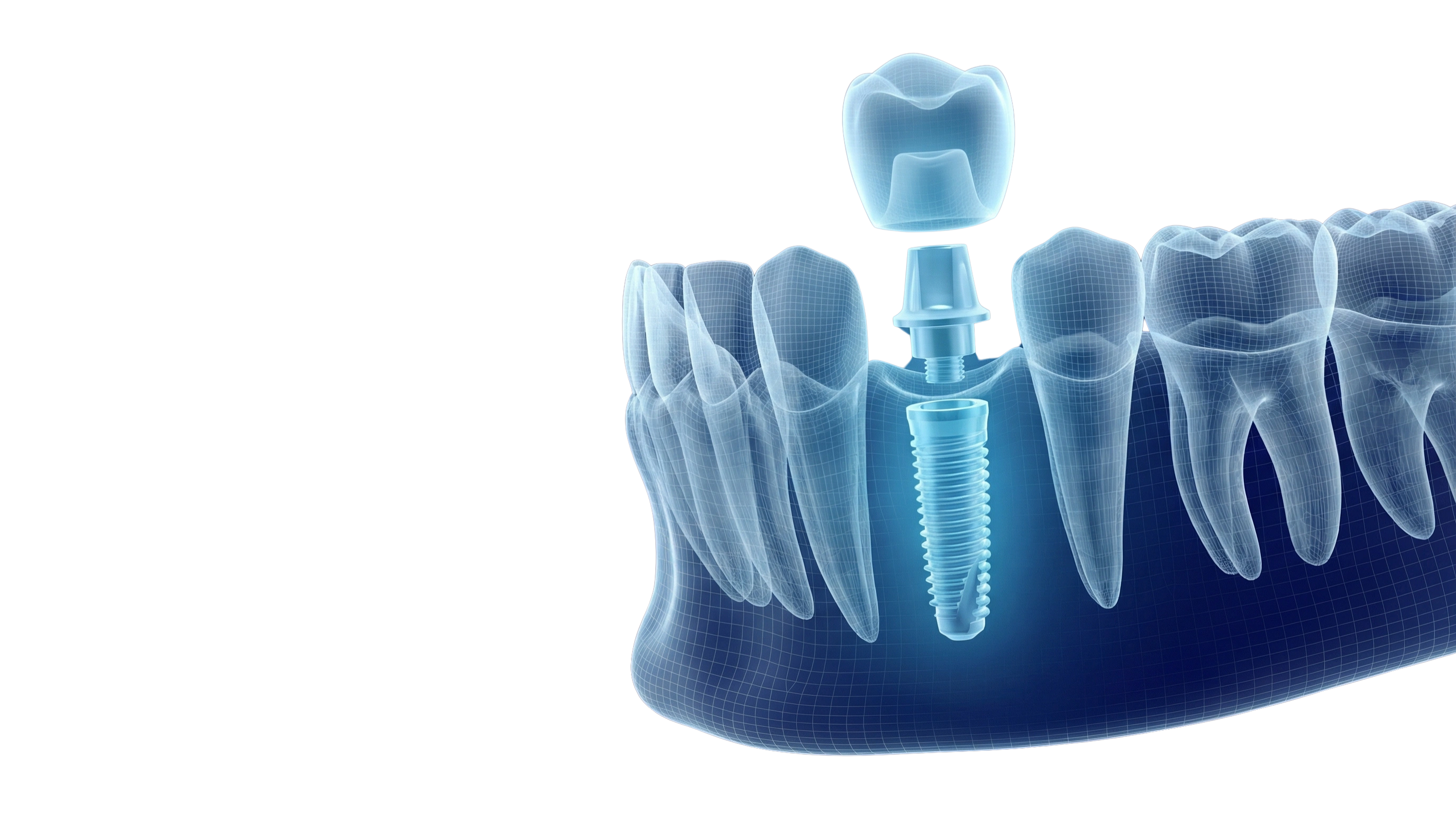
A snap-on overdenture is still a denture you take out, but it clicks onto two implants in the lower jaw (usually four in the upper jaw, where the bone is softer) through small attachments called locators. It no longer lifts when you chew, and it usually needs no adhesive.
A fixed All-on-4 bridge is a full arch of teeth screwed onto four implants, the back two tilted to avoid the sinus or the nerve. Only a dentist removes it.
Conventional denture
Snap-on overdenture
Fixed All-on-4
Held by
Suction (upper), gum ridge and muscles (lower)
2 implants (lower), usually 4 (upper)
4 implants, screwed in
Removable
Yes, by you
Yes, by you
Only by a dentist
Stability when chewing
Upper usually good, lower often lifts
Stable; can rock slightly at the back
Fixed
Covers the palate
Yes (upper)
Upper often less, depending on design
No
Adhesive
Often needed for the lower
Usually not needed
Never
Bone under it
Keeps shrinking
Better preserved around the implants
Better preserved around the implants
Wearing parts
Whole denture, 5 to 7 years
Denture part 7 to 10 years, locator inserts every 6 to 12 months
Bridge typically 10 to 15 years
Trips to Fethiye
1 trip, 3 to 5 days
2 short trips, 3 to 6 months apart
2 trips: 6 to 8 days, then 7 to 10 days
Chewing, speech and everyday comfort
Chewing. A conventional upper denture often works well. The lower is the usual problem: with no palate to grip, it lifts when you bite into an apple, a crusty roll or a piece of steak, and seeds slip underneath. Anchoring the lower denture on two implants removes most of this movement. The evidence is strong enough that the McGill consensus statement (2002) and the York consensus statement (2009) concluded that a lower denture held by two implants should be the minimum offered as a first choice to people with no lower teeth. A fixed bridge goes further, because nothing moves at all.
Speech and taste. An upper denture covers the palate, which dulls temperature and some taste and can affect sounds such as "s" and "th" in the first weeks. A loose lower denture can click when you talk. All-on-4 leaves the palate free.
Adhesive. Many people with a lower denture use adhesive every day, and it needs cleaning off the gum and denture each night. With locators adhesive is normally unnecessary; with a fixed bridge it is never used.
Cleaning. A denture comes out at night: brush it, soak it, brush your gums. An overdenture is the same, plus a quick clean around the two locators. A fixed bridge stays in, so you clean under it with a water flosser and small interdental brushes and see a hygienist about twice a year.
Bone loss: why a lower denture tends to get looser
Once teeth are removed, the bone that held them starts to shrink. The fastest change is in the first months, but under a denture it continues for life. A long-term study following denture wearers for 25 years (Tallgren, 1972) documented this continuing reduction of the ridges, with the lower jaw usually affected more. In practice this is why a denture that fitted well becomes loose, why it needs relining every year or two, and why after many years some people have a flat lower ridge on which no new denture will hold.
Implants carry chewing forces into the bone, and the bone around them tends to be better preserved. They do not regrow bone that has already gone, and with an overdenture the back of the ridge still carries part of the load, so it can keep changing slowly and an occasional reline is still needed. Waiting has a cost of its own: two short implants at the front of the lower jaw are usually possible even after decades of dentures, but a fixed bridge needs more bone and may then require grafting. Our bone graft and sinus lift guide explains when that applies.
Lifespan and upkeep over 10 years
Over 10 years
Conventional denture
Snap-on overdenture
Fixed All-on-4
Relines
Every 1 to 2 years
Occasionally, as the back of the ridge changes
Not applicable
Replacement
Usually once (lasts 5 to 7 years)
Denture part may be due around year 7 to 10
Acrylic teeth may need refurbishing after 5 to 10 years; zirconia typically 10 to 15 years
Small parts
None
Nylon locator inserts every 6 to 12 months
Screws checked at reviews
Check-ups
Yearly
Yearly
Hygiene visits about twice a year
The implants themselves are the long-lasting part when they are looked after; our guide to how long implants last covers what shortens their life. Our written guarantee covers the implant fixture for life.
Age and health: who can have implants
Age on its own is not a barrier. A 2018 systematic review and meta-analysis (Schimmel and colleagues, Clinical Oral Implants Research) looked at patients aged 75 and over and found implant survival of about 97% after one year and 96% after five.
Diabetes: well-controlled type 2 diabetes was associated with high implant survival in the same review. Poorly controlled diabetes slows healing, so we ask about your recent blood sugar control before planning.
Smoking: smoking raises the risk of an implant failing to integrate. Our implant guarantee is limited for heavy smokers, and we say so before you book.
Medication and radiotherapy: high-dose bone drugs given for cancer and radiotherapy to the jaws carry a real risk of complications; low-dose osteoporosis tablets were associated with high survival. Tell us about every medicine you take.
Bone: two front implants for an overdenture rarely need grafting. All-on-4 is decided from a 3D scan; a sinus lift or graft adds cost and possibly a trip.
Hands and support: clicking an overdenture in and out needs some grip, and cleaning under a fixed bridge needs some dexterity. For someone who depends on carers, a removable denture can be the simplest choice.
The real 10-year cost per arch: UK and Turkey
The table below is for one lower arch. It uses typical UK private prices, four relines and one replacement for a conventional denture, one reline for an overdenture, and an acrylic All-on-4 bridge. Relines after treatment in Turkey are done by your dentist at home, at UK prices. For travel we assume about £400 per trip for flights and spending; accommodation in central Fethiye and the transfer from Dalaman are included in our treatment plan. Adhesive, routine check-ups and locator inserts are left out. Our denture and overdenture prices are indicative and are confirmed in your written plan.
Option
Upfront
Relines
Replacement
Travel
10-year total, typically
Denture, NHS England
£332.10 (Band 3)
4 x £76.60 (Band 2)
£332.10
None
About £970
Denture, UK private
£500 to 1,500
£400 to 1,200
£500 to 1,500
None
£1,400 to 4,200
Snap-on on 2 implants, UK private
£3,500 to 7,000
£100 to 300
Not usually within 10 years
None
£3,600 to 7,300
All-on-4, UK private
£10,000 to 14,000
None
Possible refurbishing, not counted
None
£10,000 to 14,000 or more
Denture, Fethiye
500 to 700 EUR (about £435 to 610)
£400 to 1,200 at home
£500 to 1,500 at home
1 trip, about £400
About £1,750 to 3,700
Snap-on on 2 implants, Fethiye
2,000 to 2,800 EUR (about £1,740 to 2,440)
£100 to 300 at home
Not usually within 10 years
2 trips, about £800
About £2,650 to 3,550
All-on-4, Fethiye
3,500 to 6,000 EUR (about £3,050 to 5,220)
None
Possible refurbishing, not counted
2 trips, about £800
About £3,850 to 6,000
First, travelling for a conventional denture alone makes little financial sense: the upkeep happens at home, and an NHS denture is cheaper still if you can get an appointment. Second, for a snap-on overdenture the difference is roughly £1,000 to 3,750 per arch, worthwhile but not dramatic. Third, the gap is largest for fixed teeth, typically £6,000 to 8,000 per arch, and both arches on All-on-4 start from 7,000 EUR at our clinic. Our All-on-4 cost guide breaks down UK quotes line by line, and the full mouth implants guide covers both jaws together. The NHS and UK dental insurance do not pay for treatment in Turkey.
Who should stay with a denture
A denture remains the better choice if:
your current denture is comfortable, especially an upper one that holds well by suction. Many people are content with an upper denture and only need help with the lower;
a loose denture simply needs a reline or a well-made replacement. That is worth trying first, and it is cheap;
you have had radiotherapy to the jaws, take high-dose bone drugs for cancer, have poorly controlled diabetes, or cannot have even minor surgery;
you smoke heavily and do not plan to stop;
you cannot manage two trips abroad or want every follow-up within a short drive;
you rely on carers for daily mouth care, where a removable denture is often easiest to keep clean.
If you stay with a denture, keep it working: take it out at night, have it checked yearly, reline it when it loosens and replace it when it no longer fits, rather than relying on more adhesive.
How the decision is made with us
Send a panoramic X-ray or clear photos of your mouth and current denture. Dr. Mustafa Besli, head dentist with more than 15 years in implantology, assesses your bone and tells you which of the three options is realistic, including when a new denture is the sensible answer. You receive a written plan with prices before you book anything. Our guide to dentures, snap-on dentures and All-on-4 in Turkey describes each treatment step by step.
Denture: one trip of 3 to 5 days for impressions, try-in, fitting and adjustment.
Snap-on overdenture: a short trip to place the implants, with a denture fitted so you fly home with teeth, then a second short trip after 3 to 6 months to fit the locators.
All-on-4: 6 to 8 days with a fixed temporary bridge, then 7 to 10 days for the final bridge after 3 to 6 months.
Accommodation in central Fethiye and the transfer from Dalaman Airport (about 45 minutes) are included with the plan. The implant fixture carries a lifetime guarantee and zirconia bridges 3 years; the guarantee covers treatment, not flights or travel. Relines and locator insert changes can be done by your own dentist at home, and you leave with written records of the implant system used.
If you are weighing up implants or dentures, send us your X-ray or a few photos. We will reply with a free written plan that compares the realistic options for your mouth, with prices, and tells you honestly if staying with a denture is the better choice.
Dr. Mustafa Besli
Smile & Holiday
Dr. Mustafa Besli is the head dentist at Smile & Holiday in Fethiye, Turkey, specializing in aesthetic dentistry, smile design, and implantology with over 15 years of clinical experience.
Frequently Asked Questions
Frequently asked questions about this topic
Related Treatments
Explore treatments related to this article